The Songs
Ten songs. Three acts. Every number advances the story and carries emotional weight. Below are the three produced demos that showcase the musical's range and ambition.
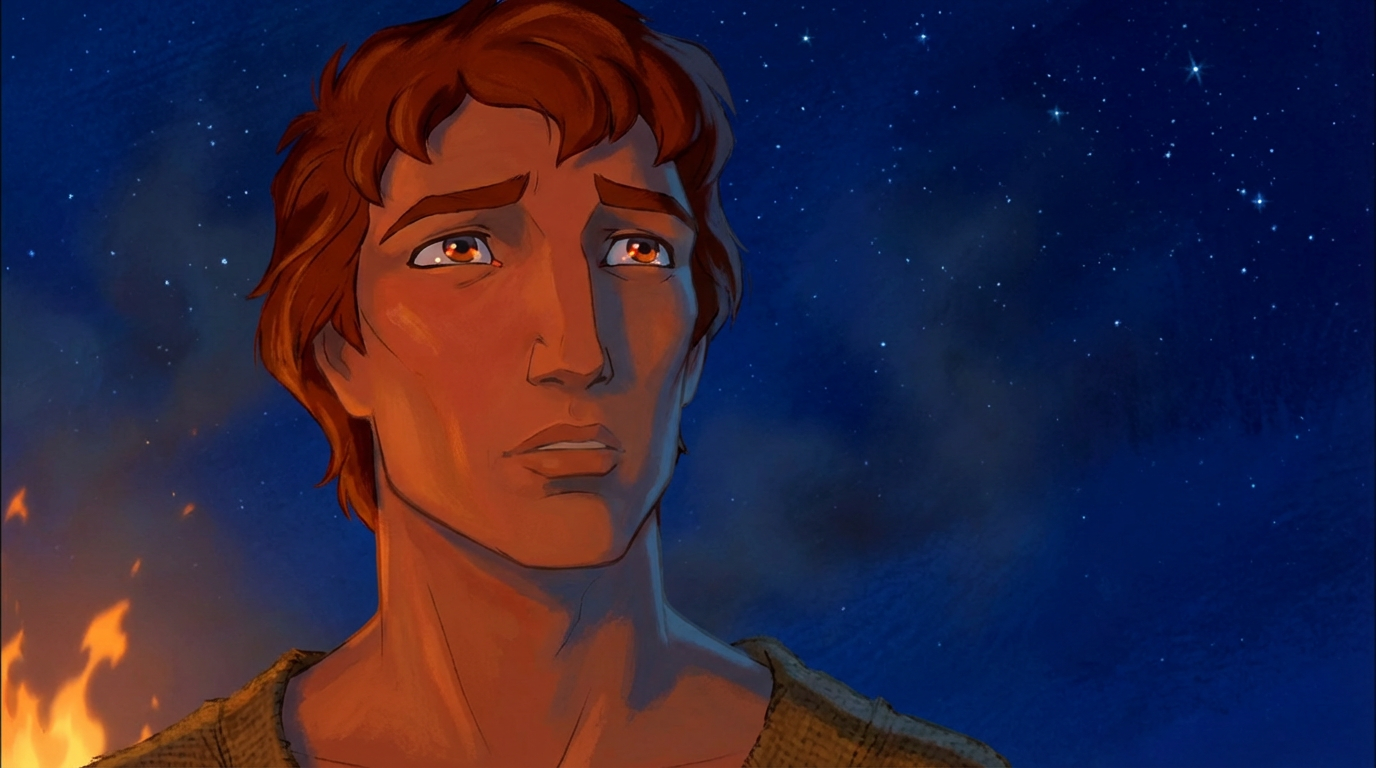
Act One, Scene 2
"Do You See Me"
David's Opening Prayer
Do You See Me
The Moment
After killing a lion with his bare hands to protect his flock, David sits alone in the darkness, shaking in the aftermath. No one saw what happened. No one would believe it if he told them. He looks at the stars and asks the only question that matters: "Was that You?"
Why This Song Matters
This is David's "I Want" song - but instead of wanting fame or love or adventure, he wants something deeper. He wants to know if he's seen. If he matters. If the God his people talk about actually notices a forgotten shepherd boy in a field. It's intimate, vulnerable, and sets up everything that follows.
Musical Style
Intimate ballad with sparse instrumentation that builds. Middle Eastern textures on the lyre/harp. The orchestration swells as David's prayer intensifies, then pulls back to leave him alone under the stars.
.webp)
Act One, Scene 9
"The Lord Sees"
The Anointing
The Lord Sees
The Moment
The prophet Samuel has rejected all seven of Jesse's sons. Then David enters - dusty, confused, smelling like sheep. Samuel whispers "Don't be afraid," and pours oil over the forgotten son's head. Something enters the room. The Spirit of the Lord rushes upon David from that day forward.
Why This Song Matters
This song captures the central theological theme of the entire musical: God sees what humans miss. Samuel almost anointed the wrong person based on appearances. The song contrasts human judgment with divine vision, building to a moment of transcendence as the anointing occurs.
Musical Style
Sacred and weighty. Begins with Samuel's doubt and fear, transitions through the rejections, then transforms into something luminous and overwhelming as the oil pours. Choral elements suggest divine presence.
.png)
Act One, Scene 15
"The Giant's Taunt"
Goliath's Villain Number
The Giant's Taunt
The Moment
For forty days, Goliath has strode into the Valley of Elah and mocked Israel's army, Israel's king, and Israel's God. Nine feet of bronze-covered death, issuing a challenge no one will answer. The armies of the living God, paralyzed by one man's blasphemy.
Why This Song Matters
Every great musical needs a great villain number. Goliath isn't just physically imposing - he's psychologically terrifying. This song establishes the impossible odds David will face. It should make audiences feel the weight of Israel's humiliation and understand why everyone - including King Saul - is frozen in fear.
Musical Style
Thundering and bombastic. Heavy percussion like war drums. Brass that sounds like bronze armor. The melody itself should feel massive and oppressive. When Goliath sings, the whole valley should seem to shake.
The Complete Score
The full musical includes ten songs across three acts. The remaining seven songs are outlined below, awaiting production once the project moves forward.
Act One, Scene 18
"In the Name"
David's declaration before battle - his answer to Goliath's taunt.
Act One, Scene 20
"Soul Knit to Soul"
David and Jonathan's covenant of friendship.
Act One, Scene 21
"Ten Thousands"
Saul's tragic descent into jealousy and madness.
Act Two, Scene 26
"The Cave"
Anthem of the outcasts who gather around David.
Act Two, Scene 28
"The Lord's Anointed"
David's refusal to kill Saul despite the opportunity.
Act Three, Scene 34
"How the Mighty Have Fallen"
Lament for Saul and Jonathan after Gilboa.
Act Three, Scene 36
"The Shepherd King"
Finale - David crowned and dancing before the Ark.